EPDM Roofing
Learn More About EPDM Roofing Material in Logan and Northern, Utah
Finding the right roofing solution for a flat or low-slope building can feel overwhelming. Utah residents and business owners face unique climate challenges, from heavy winter snowfall to intense summer heat. These extreme temperature swings put significant stress on building materials, making your roofing choice critical to your property’s longevity. If you own a commercial building or a home with a flat roof, you need a system that can handle these harsh conditions without requiring constant maintenance. That is exactly where EPDM roofing comes into the picture. As one of the most reliable and durable flat roofing options on the market, it provides excellent protection against the elements. Many property owners choose this system because it offers a fantastic balance of cost, longevity, and performance. Reading this guide will give you a clear understanding of what makes this roofing system so popular. We will cover everything from the basic materials used to the detailed installation process. You will also learn about the specific benefits it offers and how to spot signs that your current roof needs professional attention.
What Is EPDM Roofing?
Before investing in a new roof, you need to understand exactly what materials are protecting your building. EPDM stands for Ethylene Propylene Diene Terpolymer. This might sound complicated, but it is essentially an extremely durable synthetic rubber roofing membrane. This material is primarily derived from oil and natural gas, creating a tough, flexible surface that can withstand severe weather conditions.
People frequently refer to this material simply as a rubber roof. The EPDM roofing material typically comes in large rolls, available in varying thicknesses to suit different structural needs. These large sheets make it exceptionally well-suited for covering expansive commercial buildings, though it works just as effectively on residential flat roofs.
Understanding what is epdm roofing is also means looking at its design. The material is typically black, which helps melt snow quickly during cold Utah winters. Some manufacturers also offer white options to reflect heat. The EPDM rubber roofing membrane is highly prized in the construction industry for its elasticity. It can expand and contract with temperature changes without cracking or breaking, making an EPDM flat roof a remarkably resilient choice for modern structures.
Benefits of EPDM Roofing
Choosing the right material involves weighing the long-term advantages against the initial investment. EPDM roofing material stands out because it delivers consistent performance over decades. Property owners who choose this system enjoy several distinct advantages that make managing a building easier and more cost-effective. The advantages of installing an EPDM flat roof extend far beyond basic weather protection. Here are the top benefits you can expect from this material:
- Exceptional Durability: The synthetic rubber compound resists UV radiation, ozone, and extreme temperature fluctuations. A well-maintained roof can last up to 30 years or more.
- Cost-Effectiveness: Compared to other flat roof materials, the initial cost is highly competitive. The long lifespan also means a lower total cost of ownership over time.
- Energy Efficiency: The dark surface of traditional EPDM absorbs heat, which can lower heating costs in the winter.
- Low Maintenance: These roofs require very little ongoing maintenance. When issues do arise, an EPDM roof repair is usually straightforward and affordable.
- Eco-Friendly Qualities: The material is fully recyclable at the end of its lifespan. Producing the membrane also requires less energy than many alternative roofing products.
Our EPDM Roofing Services
As a property owner, you need a reliable partner to keep your building secure. Skabelund Roofing provides comprehensive solutions tailored specifically to flat and low-slope structures. We bring decades of expertise to every project, ensuring your roof performs perfectly year after year.
Our team handles everything from initial inspections to full system replacements. We offer expert EPDM roofing installation for new construction projects and existing buildings. If your current roof is showing its age, we can apply an EPDM rubber roof coating to extend its life and restore its weatherproofing capabilities.
When unexpected storm damage occurs, our crews are ready to perform fast and effective EPDM roof repair. We evaluate the structural integrity of your roof deck, check all flashing, and seal any compromises in the membrane. You can trust our skilled contractors to use the highest quality materials to protect your investment.
EPDM Roofing Installation Process
Proper installation is the key to maximizing the lifespan of your new roof. A poor installation can lead to premature failure, water leaks, and costly interior damage. At Skabelund Roofing, we follow a strict, detail-oriented EPDM roofing installation process to guarantee flawless results. Applying EPDM rubber roofing requires careful preparation and precision. Our installation process includes the following critical steps:
- Thorough Inspection and Preparation: We start by stripping away the old roofing materials and inspecting the underlying decking for rot or structural damage. We sweep and clean the surface completely.
- Adding Insulation: Depending on your building requirements, we install high-quality insulation boards to improve energy efficiency and create a smooth substrate for the membrane.
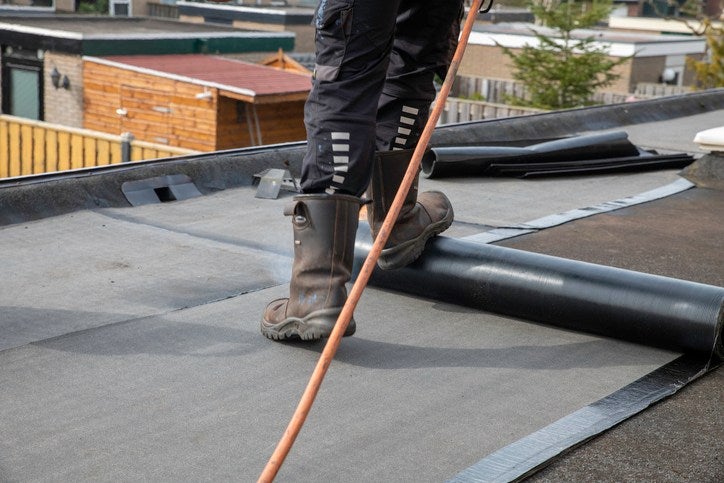
- Membrane Placement: We unroll the EPDM rubber roofing membrane and allow it to relax for a set period. This prevents the material from wrinkling or bubbling after installation.
- Securing the Roof: We secure the membrane using one of three methods. We can fully adhere it with specialized bonding adhesives, mechanically attach it using plates and fasteners, or use a ballasted system with large stones to hold it in place.
- Sealing the Seams: The final and most important step involves sealing all seams and flashing around vents, pipes, and HVAC units to ensure a completely watertight finish.
EPDM Roofing vs Other Flat Roofing Systems
Selecting a flat roof requires comparing different materials to see which best fits your specific needs. While EPDM is highly popular, property owners often consider TPO (Thermoplastic Polyolefin) and PVC (Polyvinyl Chloride) as alternatives. Understanding how these systems differ helps you make an informed decision for your commercial or residential property.
TPO and PVC are both white, heat-welded single-ply membranes. They are excellent at reflecting heat, which makes them popular in extremely hot climates. However, they lack the proven track record of EPDM, which has been used successfully for over 50 years. The EPDM roofing material is generally more flexible than TPO, making it less prone to cracking over time.
Another older alternative is Built-Up Roofing (BUR), which involves multiple layers of tar and gravel. BUR is incredibly heavy and can put excess stress on your building structure. EPDM is lightweight, installs much faster, and does not produce the strong odors associated with hot asphalt applications. For many Utah properties, the elasticity and cold-weather performance of an EPDM flat roof make it the superior choice.
Signs You Need EPDM Roof Repair or Replacement
Even the most durable materials eventually show signs of wear. Catching problems early saves you money and prevents catastrophic water damage inside your building. Regular inspections are vital for identifying minor issues before they turn into major structural emergencies.
You should call our professionals for an inspection if you notice any of the following warning signs:
- Tears or Punctures: Falling debris, heavy foot traffic, or severe hail can pierce the rubber membrane.
- Seam Separation: The adhesive used on seams can degrade over many years, leading to openings where water can easily penetrate.
- Pooling Water: Flat roofs need proper drainage. If water sits on your roof for more than 48 hours after a storm, your roof structure may be sagging.
- Chalking: As the membrane ages and breaks down from UV exposure, it can develop a chalky, powdery residue on the surface.
- Shrinkage: Over time, the material can shrink and pull away from the edges or parapet walls, leaving the perimeter of your roof completely exposed.
If we catch these issues early, a simple EPDM roof repair or a fresh EPDM rubber roof coating can often solve the problem. If the damage is extensive, a full replacement will be the safest option for your property.
Why Choose Us for EPDM Roofing?
Trusting a contractor with your roof is a major decision. Skabelund Roofing has been serving Cache Valley and Northern Utah for over 25 years. We built our reputation on a foundation of honesty, integrity, and exceptional craftsmanship. When you hire us, you are getting a dedicated team that treats your property with the utmost respect.
Our longevity in the roofing industry means we have seen and solved every flat roofing problem imaginable. We use only top-of-the-line materials to ensure your new roof stands the test of time. Our team also offers flexible financing options to make your necessary roofing projects as stress-free as possible.
Customer service is our top priority. From your first phone call to the final inspection of your new roof, we communicate clearly and transparently. We even provide assistance with insurance claims to help you navigate the paperwork after a severe storm.
FAQs
Yes, you can walk on an EPDM roof. The synthetic rubber material is designed to handle limited foot traffic for routine maintenance, HVAC servicing, and standard inspections. You must exercise caution and wear soft-soled shoes to avoid accidentally puncturing the membrane. We recommend placing protective walkway pads in high-traffic areas to preserve the integrity of the roof.
An EPDM roof does not strictly require a protective coating right after installation. The material is inherently resistant to UV rays and weathering. As the roof ages, applying an EPDM rubber roof coating can restore its protective qualities, seal minor imperfections, and extend the overall lifespan of the roof by several years.
Fixing a leak typically involves locating the puncture or separated seam and cleaning the area thoroughly. A professional roofer applies a specialized EPDM primer to the damaged section. After the primer dries, we apply a peel-and-stick flashing tape or a specialized rubber patch to seal the leak completely. You should always hire a professional to ensure the repair is completely watertight.
Choosing between EPDM and TPO depends entirely on your specific building needs and location. EPDM has a longer proven track record in the industry and performs exceptionally well in cold climates due to its flexibility. TPO is a white membrane that reflects heat better, which can be advantageous for cooling costs in the summer. EPDM is generally more affordable and easier to install.
An EPDM roof is famous for its longevity. When installed correctly by professional contractors and maintained properly, this roofing system can last between 25 and 30 years. Some well-maintained roofs have even been known to last up to 40 years. The durability heavily depends on the thickness of the membrane chosen and the climate conditions the roof must endure.